



One of the Biggest Unintended Mistakes That Parents Make
Every one of us wants our children to be the very best self they can be. And so, what do we do as parents? We encourage them, we support them, we rescue them, we prod them, we motivate them, everything that we can to help them.
You would think that with all of that support and encouragement, that they would be growing up to be the most robust, resilient, self-confident kids, and yet this is not the case.
Sadly, one of the greatest emotional epidemics of modern times is the fact that our children have this very strong internal belief that they are not enough. The inner pain and stress that this not enough feeling causes for the child is enormous.
It colors their entire life. It affects their self-esteem, their energy, their vibrancy, their love of life, their joy.
Every day, I see toddlers and teens and young adults all of whom have this negative,’ I am not enough’ belief. This negative self-belief is at the root of all behavior, mood, emotional, physical and learning symptoms.
I also see mothers and father who themselves also carry a deep ’I am not enough’ feeling.
https://vimeo.com/1173057103/9fbed8e099
What strikes me is that these children have got the most supporting, loving parents, and yet they still struggle with low self-worth and low self-esteem.
So, I ask myself ‘why?’
Why do so man thousands of kids not feel good about who they are?
It seems to me that what is happening is that with all the best intention and the greatest love in the world, we, as parents, are constantly telling our children, "Try harder. Do better’
You can get better grades. You can behave in a better way." And of course, our intentions are very honorable, but when we are constantly telling them to try better, to do more the child is coming to the conclusion that the way I am is not good enough.
This type of conversation is telling the child that their self-worth depends entirely on their achievement, on how well they are performing.
And so, when, for some reason they are not performing well, the child doesn’t think to themselves, ‘I didn’t do that well,’ Instead they think, ‘I am not enough.’
Every time we have one of these ‘you can do better’ conversations with your child, you are actually deepening the painful negative self- belief they have.
Of course, as parents we do need to encourage our kids to reach higher, but folks there is a right way to do this and a wrong way to do this. The right way will set you child up for great success and achievement. The wrong way will set you child up for struggle and even failure.
How to avoid this parenting trap.
Start now, by becoming aware.
- Become aware of how often you tell your child they need to improve.
- How often do you push your child, because you feel what they are achieving is not good enough.
- How often do you tell your child they need to try harder.
- How often do you label your child as unmotivated?
- Ask yourself, ‘Do I understand what is happening inside my child that is causing my child not to be able to use his greatest potential?’
- Are you aware that there is a deeper reason for your child’s behavior that you need to understand and know how to heal?
If you realize that this describes your behavior, proceed to the next step:
Heal your child’s self-belief
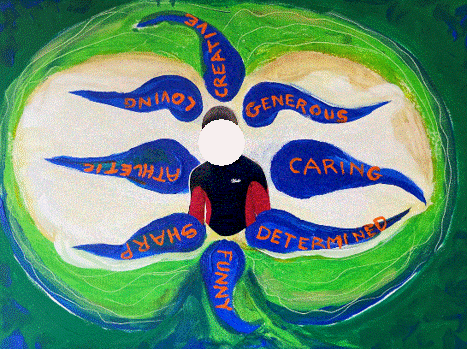
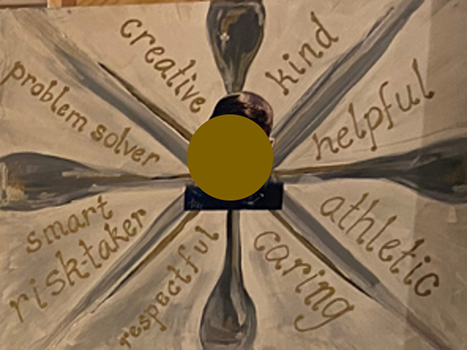
1. Make a list of all the positive characteristics your child possesses (which you may either be taking for granted, or even don’t notice). These are your child’s unique personality characteristics that make him/her the special, wonderful being that they are.
I recommend you even create a board and show it to your child. If you need assistance with this, I can show you how. Contact me at +1 214 682 8980
Here are some of the boards that parents have created for their child
2. Then start becoming conscious of the moments when you see the child displaying one of those unique characteristics.
3. Then speak to your child about it. ‘I love the way you make me laugh. You have such a wonderful sense of humor. You are so creative. You are awesome. What a kind, caring person you are. I love this about you.
4. At the end of each day, review the conversations you had with your child, and note that there should always be 5 positives to one negative.
There is much more you can do as a parent, but the above 10 easy to do things, are an excellent place to start.
These will have a profound effect on your child. It will build their self-confidence and strengthen their emotional resilience. These are the 2 most important characteristics that all children need, in order to deal with today’s pressurized, competitive, fast-moving world.
To learn the skills parents, need to raise strong, confident, motivated, emotionally resilient children see www.drsandygluckman.com/consulting
Or call +1 214 682 8980 to schedule a complimentary 30-minute consult with Dr. Sandy

Common Childhood Diagnoses Linked to the Nervous System
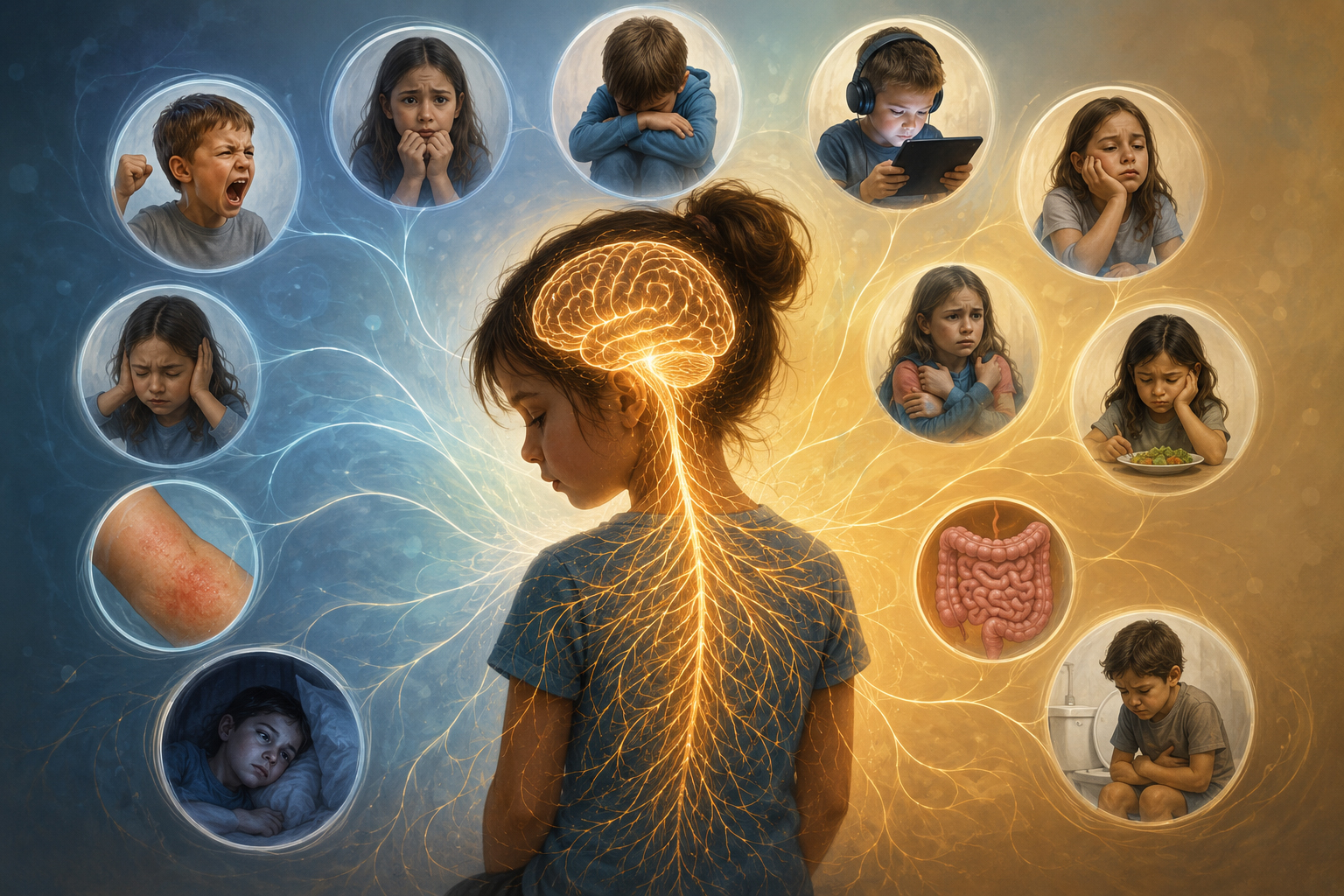
Would you be surprised if I told you that Defiance, Anxiety, Depression, Screen Addiction, Low Motivation, Social Anxiety Disorder, Sensory Processing Issues, Eating Disorders, Gut Struggles, Constipation, Eczema, Sleep Issues (to mention just a few) …
… all have the exact same root cause
Since my parenting That Heals protocol is all about treating the underlying root causes, this means then, that the treatment plan for healing any of these problems is identical.
Heal the root cause. And the problems no longer show up.
Exactly what is this root cause?
It is the condition of your child’s nervous system. Ideally, we want your children’s nervous system to be in a state of safety and calm. IF you have a child with any emotional, behavior, mood or physical symptoms, this tell us that your child’s nervous system is in a state of chronic stress, which has caused it to become dysregulated.
The symptoms you are seeing (no matter what they may be) is your child’s way of trying to tell you, ‘Hey, Mom/ Dad, my nervous system is in overload. Please help me regulate my nervous system’.
And the longer you delay treating this, the worse the symptoms will become. Heal this and the symptoms go away.
What happens when your child’s nervous system is in stress overload?
Your child is stuck in fight-or-flight or freeze mode. Or combinations of fight, flight and freeze.
Fight shows up as Defiance, anger, temper tantrums, anxiety
Flight shows up as Withdrawal, sadness, depression, non-communication, anxiety
Freeze shows up as anxiety, shutting down, afraid to try new things or interact with life.
If this happens your child is living life as a survivor instead of being able to feel good about themselves, behave positively, learn easily, and love life. All of which is only possible with a regulated nervous system!
Traditional practitioners will give your child a diagnosis and perhaps a script for medication. Perhaps they will suggest therapy (no thanks!).
They won’t tell you though that your child’s nervous system is in stress overload. Nor will they tell you that when you learn exactly how to resolve that, there will be no more symptoms and no more diagnosis.
That doesn’t mean every diagnosis is incorrect. But the diagnosis on its own doesn’t tell you why your child has these symptoms and how to heal it. What it does always tell us, is that the nervous system is overloaded and needs to be healed.
Dear parent, the answer is not to try to teach the child how to focus and pay attention, not to feel anxious, not to be addicted to screens, not to starve themselves, not to hurt themselves, not to be sad, not to be unmotivated…. these are not the problems. The real answer is for you to learn how to regulate your child’s nervous system.
No matter what you do to try to fix the child from the outside-in, it cannot work while the child has a nervous system that is overloaded by stress.
In fact, talking to your child about their problematic behaviors, has a really negative consequence. It makes your child feel that who they are is not O.K. And they start believing that, ‘I am not enough’.
This belief is confirmed for the child, by going to all the doctors and having all the tests and getting diagnoses and medications and mom and dad looking worried and anxious.
This horrible belief of not being good enough, causes the child more inner stress and further dysregulates the nervous system.
So please dear parent, don’t focus on fixing the behavior, or treating the symptoms, learn how to regulate your beloved child’s nervous system.
Once your child’s nervous system feels safe and is calm, the problems will reverse and be a thing of the past.
Your 3-Step Action Plan
1. You start by understanding that if your child has a dysregulated nervous system, it can only be because one, or both parents, also have a dysregulated nervous system. Neuroscience has shown us that whatever is happening in your nervous system, will be transferred to your child’s nervous system.
2. Learn how to regulate your own nervous system first. Learn how to become a model of joy and serenity and inspiration, rather than to show up with pressure, stress and anxiety.
3. Once you have achieved this, the next step is to learn a new way of communicating, and engaging with your child, in a way that does not unintentionally trigger stress in your child.
Finally, I would like to remind you that if you are reading this and it resonates with you, that will not be enough to help you heal your child.
https://vimeo.com/1207170977/aea18a6bc8
Enroll for my next life-altering
Parenting That Heals
Live 10-Session Program.
To enroll call me on +1 214 682 8980

This can be Hard for Parents to Do
Hello Wonderful Parents
When it comes to parenting a child that has a dysregulated nervous system, this requires new and different parenting behaviors and skills.
And if you are a parent that has learned the parenting skills for regulating your child’s nervous system and are applying these parenting skills, you may notice that this is likely to draw the attention of others.
This is because healing your child’s nervous system does not look like what traditional parenting looks like. It looks like the very opposite of what others would expect or believe you should be doing.
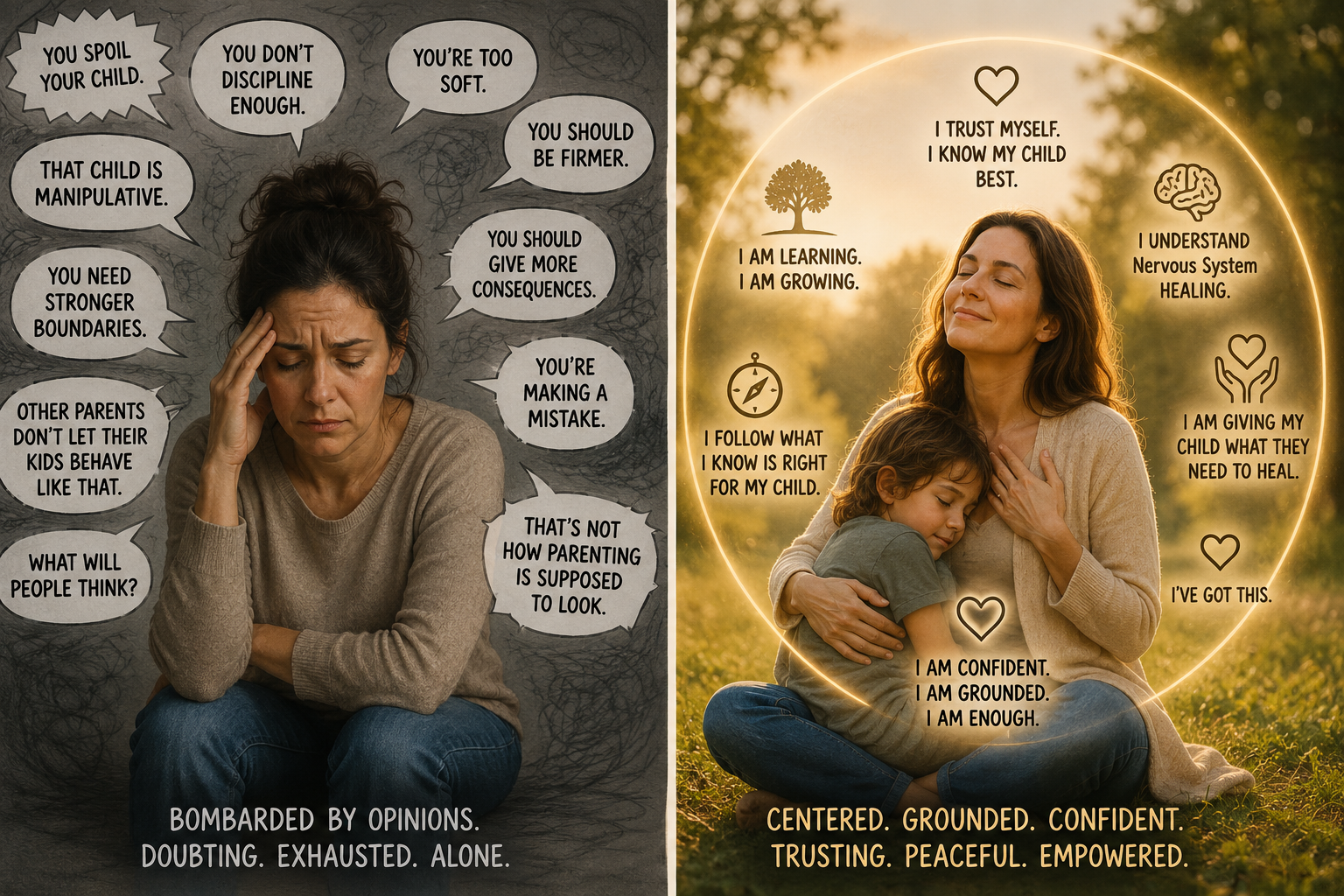
It seems like everyone around you and especially those closest to you, has an opinion…
About your child’s behavior
About your parenting style
About what they think is wrong.
Others may see the child as
- spoiled
- manipulative
- difficult
- lazy
- irresponsible
And they may believe:
- you don’t discipline them enough
- you are too soft
- you should set stronger, non-negotiable boundaries
- you should be giving the child more consequences
Dear parents, if you are experiencing this, I have some really important advice for you.
Learn how to drown out the voices and opinions of others.
Because if you listen, to every opinion, you will begin doubting yourself.
You will spend precious energy trying to explain yourself.
Trying to explain your child.
Trying to explain about nervous system dysregulation.
Trying to explain that the way you are parenting is actually helping your child heal.
The truth is…
Most people simply do not understand nervous system dysregulation.
And trying to make uninformed people understand something they have never learned
about can become exhausting, lonely and deeply frustrating. Especially when it involves
your child.
So, dear parents if you are going through this, my advice to is this…
DON’T LET THEM MAKE YOU DOUBT YOURSELF
DON’T FEEL THE NEED TO EXPLAIN THIS TO ANYONE.
You do not need everybody to understand your child.
Only you need to understand your child.
You don’t need them to be informed about nervous system healing.
Only you need to do that.
I know that this can be hard for parents to do
Because it hurts when people judge your child.
It hurts when family members don’t understand and think you are making a mistake.
It hurts when teachers, friends, strangers, or even your own spouse question what you
know to be true.
There comes a point when you must stop explaining.
Learn when to say with strength and confidence (not anger or resentment)
“I’ve got this, thank you.
I have learned what my child needs to heal.
This is what my child needs in order to heal.
If you truly want to understand more of what it is I am doing, I would be happy to share articles and videos with you.”
And then…
Leave it there.
Dear wonderful parents, please remember
Not everyone gets a vote about your parenting
And not everyone is entitled to an opinion about your child’s healing journey.
This is your child.
Your family.
Your path.
Trust yourself.
With much love and gratitude
P.S. If you have questions about your child’s nervous system, you can:
To schedule a free consultation send a request with your phone number to drsandygluckman@gmail.com. Dr Sandy will call you to agree on the best available times.
Chat with Dr Sandy AI 24 hours a day
Use my AI Twin to describe your child’s problems and receive amazing answers about why your child is struggling and how to HEAL this

How to Help a Highly Sensitive Child
Dear Wonderful Parent
I hope this message finds you wrapped in a moment of peace amidst the storm of daily life. Today, I am writing about something close to my heart—something I think many of us share, whether we realize it or not. It’s about being a sensitive person, or as it is often referred to as being an “MPath” —someone with a deeply empathetic and feeling nature.
I’m an MPath myself, so I know firsthand how overwhelming it can feel to care so much. Our world is buzzing right now, isn’t it? There’s so much happening—big changes, loud news, and emotions swirling all around us.
For those of us with sensitive hearts, and for our children who might be little MPaths too, it can sometimes feel like too much to hold. But here’s the thing about sensitivity. It’s a gift. It’s a quiet superpower that lets us connect, understand, and love in ways that light up the world.
Are you an MPath?
Maybe you’ve noticed it in yourself or your child—those moments when feelings run deep, when tears come easily (happy or sad), or when the world’s noise feels like it’s turned up a little too loud.
I’ve put together a few characteristics of sensitive people below to help you recognize if you are a sensitive soul.
(And if you identify that you are, then celebrate this part of you!)
Big Hearts, Big Feelings:
Sensitive folks feel everything deeply—joy, sadness, excitement, even someone else’s pain. It’s like our hearts have extra room for it all.
Noticing the Little Things:
We pick up on the small details—the quiver in a voice, the beauty in a sunset, or the way a room feels when we walk in.
Intuition and Insight
You have a keen sense of understanding people and situations, often knowing how others feel before they say a word.
Empathy Overload
We often feel what others feel, almost like we’re carrying a piece of their emotions with us. It’s why we’re the ones offering hugs or listening when someone needs it most.
I’ve been there too—tearing up at a kind gesture or feeling my heart ache when I see someone struggling. And you know what? It’s okay. It’s more than okay—it’s what makes us, us.
This makes you incredibly compassionate but also vulnerable to emotional overload.
For our sensitive kiddos, this might show up as big reactions to small things, a need for extra snuggles, or even a wise-beyond-their-years understanding of others.
Heightened Sensory Awareness
Sounds, loud noises, lights, crowded places, and even textures can feel intense. Crowded or noisy places or tough news can hit us hard.
But that just means we’re tuned in, right?
If any of this sounds like you or your little one, you’re not alone.
Needing Quiet Time
After a busy day, we crave a cozy corner to recharge. It’s not about hiding—it’s about refilling our cups.
How do we help our sensitive children?
As parents, we can help them (and ourselves!) by carving out calm spaces, talking about feelings openly, and reminding them that sensitivity isn’t a weakness—it’s their strength. (see my videos below)
So, my fellow MPaths and MPath supporters, let’s hold this gift gently. Let’s give ourselves permission to step back when we need to, to feel what we feel, and to show our kids that it’s okay to be soft in a world that sometimes feels hard.
You’re doing an amazing job, and I’m right here with you—feeling it all, too.
https://vimeo.com/1060215580/054f6d2c60?share=copy
Watch this 2-minute video giving you a VERY important tip about how to help a sensitive child.
Here are some of the skills you will learn on my Parenting That Heals Program
If you recognize these traits in yourself or your child, here are some important skills you will learn on my Parenting That Heals Program
- How to create a calm relationship and environment for your child so that he/she feels grounded and secure.
- How to communicate and engage with your child in ways that strengthen his/her emotional resilience. And self-confidence.
- How to teach your child to establish strong boundaries with others – how and when to step back and care for themselves.
And so much more.
A Final Thought
Remember that being sensitive isn't about being weak or overly emotional. It’s about experiencing life with great depth and compassion. It’s a strength that can lead to incredible insight and kindness.
If you are a deeply sensitive person, embrace it.
If you’re raising a child that is deeply sensitive, this requires special parenting skills. It is especially important to learn how to help your child become emotionally resilient while never losing the wonderful compassion. Our world needs sensitive souls who can feel and heal, who understand and care deeply. And, at the same time, know how to care for themselves too.

To schedule a free consultation send a request to drsandygluckman@gmail.com. Dr Sandy will call you to agree on the best available times.

Choosing the Right Practitioner for your Child
In a world where too many kids struggle to learn easily, feel good and behave positively, there is nothing more empowering for a parent than to know how to Take Charge and help them.
If you read my blog or follow my work, you know that my mission is to help fill the world with resilient, talented, problem-free children. I do this by empowering parents with knowledge, tools and skills that will ensure that moms and dads know how to help their kids be all they can be.

The truth is that moms and dads have a challenge because conventional medicine does not always have the latest answers. If you’re lucky, you have a physician who has kept up with the amazing newest developments and options for treating your child’s problems. If you’re not so lucky you can end up feeling frustrated when you have tried several things, including medication, and yet your child continues to grapple with his or her problems.
Many parents don’t know that there is a treatment solution that is helping children finally get rid of their learning and behavior problems. It is an integrative approach that heals kids from the inside-out instead of from the outside-in. You will learn all about this in my book: Parents, Take Charge. Healing learning, behavior and mood problems without medication.
It is important to find a practitioner that has been trained to identify and heal the hidden underlying root causes, instead of putting a band-aid on symptoms. I specialize in this approach. There are many healthcare practitioners who do not. Instead, they are asking, ‘What are the symptoms, then they package these symptoms with a diagnostic label, and may prescribe a one-size-fits-all type of medication. They are asking, ‘what are the symptoms?’. They are not asking, ‘why is this happening?’ And so, the root causes are never identified or healed. This is why so many kids have diagnostic labels hung around their necks, may be taking medication and yet are unable to overcome their learning, behavior or mood challenges.
Here are five tips for interviewing and choosing the right healthcare practitioner for your child.
1. Gather Your Courage and Take Charge!
Being a Take Charge mom or dad means being your child’s advocate and voice. It’s like campaigning for your child. This requires chutzpah and courage, as well as the ability to be forthright about your requirements and expectations. Remember that you are the greatest advocate for your child’s treatment and care. Ask the tough questions and be assertive – your child’s future depends on it.
2. Ask these Questions
You want to be sure that the practitioner you choose knows how to treat the whole child – not just the symptoms and treats each child as a unique individual. Ask the following questions:
- Will you look for, and treat, the root causes of my child’s problems?
- How do you do this? How do you identify underlying causes?
- Is your diagnostic and treatment approach personalized and different for each child?
- Do you treat the child or the diagnostic label?
3. Seek until you find.
If you’re not confident in the healthcare practitioner’s responses you may need to shop around for a practitioner with who is like-minded with you and your needs and values. Ask other parents who may be dealing with problems with their kids. Finding the right healthcare practitioner can take some time and effort. Do your research, read patient reviews and study a physician’s background, qualifications and approach before you even have a consultation. Trust your intuition. When it’s right, you’ll know.
4. Be a Stress-less Advocate
It is tough to be a Take Charge, courageous, focused and informed advocate for your child when you are super- stressed. It is also not easy to be intuitive and present when you feel stressed and overwhelmed. High, ongoing stress can make it difficult for us to make good decisions.
Healthy stress is good. It helps us achieve great things. High stress levels sabotage us physically, mentally, emotionally and every other way. Your children need you to stress less so that you can be a great advocate for them.
Note: Dr Sandy consults with parents throughout the USA and from all parts of the world.

Why Your Child is Unmotivated and What to Do About It
There seems to be a lot of children who have low motivation and little desire or drive to learn, to achieve, to get better grades. So, let’s spend some time talking about what exactly does this term ‘Motivation’ mean? We use that term pretty loosely as though we all know what motivation means. The truth is, I think you’re going to be surprised to know, that motivation is actually a chemistry in the brain.
So, the question is why do some children have that chemistry that emerges as motivation, and curiosity and desire to achieve – and other children don’t have that chemistry? Motivation is clearly not something we’re not born with, so what is happening? Why is it that in some children the brain is not working in a way that produces what we refer to as the behavior of motivation.
Well, the thing is this Moms and Dads, that in order for a child to be curious and to jump out of bed in the morning and love to go to school and to come home and do the homework with diligence and pleasure, we need a child who feels good about who they are. That feeling is the key to what makes the brain create the chemistry of motivation.
We talk about children not being self-motivated. Notice the word ‘self’ in that phrase, ‘self-motivated. If you don’t have a good, strong sense of self, if you don’t like yourself, if you don’t think your ‘self’ is worthy, then why would you be motivated? So, what I am referring to here, is the underlying root cause of the lack of motivation. The underlying root cause of low motivation is simply that the child is not feeling good about who they are. They don’t trust that they have what it takes to achieve and so they don’t even try. That is so sad, isn’t it? But the good news is that it is so fixable!
So, what do we do when we have a child that is not motivated, doesn’t care about doing better or achieving? Well, we must get to the root cause and fix the child’s belief about himself. We must fix that lack of self-worth, lack of self-belief, and then what starts to happen, is that once they start to truly feel and believe that they are capable, that they are smart, that they are SO Enough, then the motivation comes naturally because that good feeling about themselves creates the chemistry in the brain which creates the motivation. Isn’t that amazing?!

I am going to give you 3 tips of what to do and what not to do if your child is struggling with motivation...
1. What you definitely DON’T want to do if your child is lacking in motivation, is to lecture them about this. No lecturing please! Lecturing is very stress-inducing, it causes the brain to become inflamed and that is the last thing we need when we are trying to fix the brain to become motivated. So we don’t want lecturing, we don’t want consequences, we don’t want to take things away, hoping that maybe they will become motivated. That does not work.
And of course what it does do when we are lecturing them, telling them that …you need to be more motivated, what is the problem with you …, we are actually telling them that they are not good enough. And that makes things worse for them too.
2. The second things that we DO want to do is to become aware of the fact that there is an underlying root cause that is causing the child’s low motivation - and that this is that the child does not feel good about who they are. They just don’t trust themselves enough in order to achieve. This awareness would cause you to treat the child differently. It is a sad and difficult thing for a child to feel that they are not capable of being more than what they are. So, we treat the child with compassion. Not with frustration. Not with anger.
3. Thirdly you want to learn all about ‘Neuroplastricity’ because we have discovered that when we have a belief which is a neural pathway in the brain, and when this is not a positive belief, we can unwire and rewire that belief to become positive. So obviously as a Mom and Dad you want to have the skill and the knowledge of how to do that – how to convert the negative belief to a positive belief - hat do you say when you are doing that, how do you engage with the child when you are doing that – very important skill for a parent who has a child with low motivation.
This video explains this so well.
https://vimeo.com/1080686410?share=copy
Your child does not choose to be lacking in motivation. They are not being difficult when they are unmotivated. They are hurting inside. And that’s where we go in and heal them and then the motivation appears.
In order to learn how to do this, I want to introduce you to my Video Parent Coaching Program. It is truly, a one-of-a-kind program. It is easy to do. Very easy to follow. All my videos are short giving you the tools that you need; exactly what to say how to say it, what not to do and what to do differently.
You can learn all about this program here.
Can you just imagine what life would be like for you, for your family but more importantly for your wonderful child, when you help your child, by liberating the kind of chemicals and neurotransmitters in your child’s brain that helps him or her feel motivated. It changes their entire life!
Folks, it’s really worth learning how to do this!

YOU Can Heal Your Child’s Anxiety
The condition we call ‘Anxiety’ has now reached epidemic proportions amongst adults and children. The statistics are staggering. Yet there is no blood test for this. We cannot see it on a scan. So, what exactly is it? What anxiety really is, and why millions suffer from it, continues to be misunderstood and incorrectly handled by too many practitioners and parents, and I believe that it is because of this, that we have a raging epidemic of anxiety today.
First, it’s important to be aware that anxiety is a symptom not a disease or disorder. So, if anxiety is a symptom, we need to know the answer to the question: What is the source of this symptom, because when we identify and treat the source of the anxiety, the anxiety will go away.

What is The Source of Anxiety?
I would describe anxious children as, children who do not feel comfortable in their own skin. As my clients always say to me … Okay, Dr. Sandy so what is the source of this discomfort inside of my child? Why does my child feel this way?
My answer is: ‘Your child is anxious because he or she believes that, ‘I am Not Enough.’ It is pretty scary dealing with life when you don’t have a good sense of self-worth because you believe you are not enough’. Every child I have ever seen that suffers with anxiety, is a child that has a core belief about themselves that, “I am Not Enough.’
https://vimeo.com/1080686410?share=copy
And then Mom and Dad ask the 50-million-dollar question – ‘Dr. Sandy but why would my child believe that he or she is not good enough? We love him so much.’ And the answer to this is: ‘You, unconsciously gave your child this message about himself or herself. In your well-intended desire to help them do better, be smarter, try harder, do more … you unintentionally communicated in a way that sounded like you were saying, …Who you are - as you are - is not enough.
Then these children begin to doubt that they have what it takes to meet the expectations of those around them and so they become anxious and are afraid to try. Their anxiety and fear of failure becomes stronger than their desire to succeed. And so, if we go back and back and back, looking for the answer to the question, why is my child anxious, we find that the real source of a child’s anxiety lies in the dynamics of the parent-child relationship.
Parenting a Child with Anxiety
As a parent, we walk a fine line between making our child’s anxiety worse or relieving them of this awful feeling that gnaws away at them. And if we don’t know how to parent an anxious child, we could unintentionally make it worse. This topic of how to parent an anxious child is such an immensely important one because tens of thousands of children are not able to become everything that they are actually capable of being, because their anxiety keeps them stuck and prevents them from reaching for their own kind of greatness.
3 Parenting Don’ts
1. Never push your child to do something he/she is afraid to do or doesn't want to do. When you push or nag or try to encourage them to do what they are afraid to do, you will be causing them to:
Release the stress hormone, cortisol, in their body and brain.
- Go into fight, flight or freeze as a way of coping
- Feel inadequate and worthless
- And their anxiety level goes up
2. Never try to convince your child with logic that there is no real reason for him/her to be anxious. When you give them logical reasons not to feel anxious what happen is:
- This negates their very real feelings
- Makes them feel as though they are being 'silly or stupid' which lowers their self-esteem.
- And actually, increases their anxiety level.
3. Don't let yourself build stress and anxiety about your child's anxiety. Your child feels when you are stressed and anxious and this increases his/her anxiety.
3 Parenting Do’s
1. Start by knowing one very important fact: Your child is anxious because he or she believes 'I am not enough' (not smart, strong, athletic, brave good ...just not enough). More than anything else anxious children need to know that who they are is amazing – that they are 'SO Enough' just the way they are. To change this ‘I am Not Enough’ belief, make sure that you speak about your child’s strengths each time you see these strengths being displayed. (but not in a conversation about anxiety). This way you will slowly rewire their belief of, I'm Not Enough' to I'm SO Enough.'
2. Anxious children (of all ages) need to know:
- That you understand what they are feeling; there are times in your life you have felt this too.
- Feeling anxious does not mean that they are weak.
- There is a confident, resilient person inside of them waiting to be free.
3. Learn how to let go of your own stress and fears. This is hugely important because your stress is contagious. Become aware when your own stress and anxiety are affecting your child.
If you want to become skilled in freeing your child of anxiety, there is no better way to do this than to see my Online Program, Healing Your Child’s Anxiety and Fear; 7 Ways to Help Your child Feel Safe and Love Life. In this online program, I take you by the hand and show you step-by-step how to heal your child’s anxiety. This program can change your child’s life for the better – as well as your life too!
To Medicate or Not to Medicate
Those who know me, know that I believe that medication is not a sustainable long-term solution. You can read more about this in my book, Parents Take Charge: Healing Learning, Behavior and Mood Problems Without Medication. Medication, on its own, is a band aid. It does not identify and treat the real source of the anxiety.
I do totally understand that sometimes a parent may choose the band-aid rather than watch their child hurting. And, if you do opt for medication, I truly respect your choice. Please know, though, that the medication is helping manage the anxiety, it is not healing it. Your child will be fully healed of anxiety when you understand, how and why, this symptom started in the first place. With this knowledge and information, you can begin to do what is necessary to heal the source of the anxiety and then, with the help of a practitioner, you can wean the child off medication, when the time is right. In exactly the same way, if you have a child that is grappling with anxiety and is not on medication, knowing the source of the anxiety will help you understand exactly what it is you need to do to heal it. In both cases, with or without medication, knowing how to parent a child who is anxious, is more important than I can say!
For more about how to heal your child's anxiety see: 4 Parenting Mistakes that Create Anxious Kids
https://www.youtube.com/watch?v=CTWzI-3uNwM

The Real Truth about Healing Your Child, Spirit-Body-Brain
Dr. Sandy Gluckman, an integrative child therapist, and Dr. Alina Olteanu, an integrative pediatrician, know all too well that treating only the symptoms does not heal children's chronic health or behavior problems.
Together, they offer a natural approach to medicine in Dallas and Frisco, Texas. One that includes integrative pediatrics, a functional medicine approach and psychological treatment for childhood issues such as ADD, ADHD, mood disorders, anxiety, and depression.
Doctors Gluckman and Olteanu are educating their patients about the fact that compartmentalized medicine does not work because it does not treat the whole person and is, therefore, unable to bring about long-term, sustainable health and wellness.
They teach their patients how they have been 'trained' by the medical world to think of themselves and their children as made up of separate parts, and when one part is not working well, we seek a doctor who specializes in treating that particular part. In the years gone by, this sounded like a great idea, but medicine has evolved to the understanding that we are ONE integrated system where all the parts depend on and affect each other for health and wellness.
Did you know that there are several hundred medical specialties? This means that doctors are practicing compartmentalized medicine, treating only the symptoms they want to see, instead of treating the spirit, body, and brain together as one. Doctors, Sandy Gluckman and Alina Olteanu, are showing patients the limitations of this approach by combining their areas of expertise and practicing spirit-body-brain medicine.
A patient could go to a neurologist for bad migraines or to a gastroenterologist for chronic constipation. Still, if these doctors are only treating the symptom and if no one is taking a step back and looking at the entire person, spirit-body-brain, the health issue resurfaces or gets progressively worse or new and different symptoms appear.
Of great concern to this unique duo of doctors is what this approach is doing to children who are grappling with learning, behavior, or mood challenges. Many children are labeled with all kinds of diagnoses and treated for the label. But a child is SO much more than his or her diagnostic label.
No matter what symptoms adults or children have, there are always three layers of healing:
Physical body healing
This is influenced by genetics also by our lifestyle and diet, digestion, sleep, exercise. It includes everything we put into our mouths, onto our skin, and breathe into our lungs as well as including the way we use technology.
Brain healing
Optimizing brain health includes eliminating environmental toxins and improving nutrition through healthy diet and nutritional supplements, like omega 3 for example. Because the brain and the gut speak to each other, healing the brain also includes our gut health and microbiome. There is no coincidence, for example, that the majority of children with learning, behavior, or mood problems have some gut problems and vice-versa. Children with tummy discomfort frequently are anxious or moody. Brain healing is also influenced by the beliefs we carry, the thoughts we think, the feelings we have, and how we behave.
Spirit healing
The Gluckman-Olteanu spirit-body-brain approach is based on the scientifically proven fact that feeling good, behaving positively, loving life flows from a healthy inner spirit. Conversely, a hurting spirit creates a hurting body and a hurting brain. While the concepts of the "physical body" and "brain" seem self-explanatory, let us share with you what we mean about a child's spirit. This is the energetic essence of your child. It is the uniqueness of who the child is.

One more major factor
Chronic stress is the root cause of the majority of health issues. Stress throws the spirit, body, and brain off balance and triggers symptoms in each of the three layers of healing. Dr. Alina Olteanu describes it this way:
'Attempting to heal any disease without addressing the real underlying root cause, which is the stress level, is like trying to put out a fire with a water hose while also pouring gasoline over the fire.'

Parent-Child Relationship
There is a myriad of reasons why we can be stressed, but in the case of a child, the most primary cause of stress is a parent-child relationship that is not meeting the child's unique needs. As Dr. Sandy Gluckman likes to say: "Our children arrive with the perfect parenting manual. They have come to teach us. We need to learn from then what works for them and what doesn't.'
With all the love in the world, parents can inadvertently hurt their children's spirit, either by not understanding their children's unique needs or by not being healthy themselves.
A healthy parent-child relationship starts with healthy parents, in spirit, body, brain. Parents cannot give their children what they don't have, or more precisely, what they are not. We cannot expect our children to be happy, self-confident, brave, calm, and peaceful if we don't embody those qualities in ourselves.
Remember:
- Treating just one symptom, in isolation, does not lead to true healing.
- A child's spirit-body-brain health starts with a healthy parent and a healing parent-child relationship.
Contact Dr. Sandy Gluckman, PhD at at 972 758 1246, drsandygluckman@gmail.com, or visit www.drsandygluckman.com; Dr. Alina Olteanu, MD, PhD at 214-736-1954, info@wholechildtexas.com, or visit www.wholechildtexas.com

Your Children can Sense Your Anxiety, Stress or Sadness, 4 Tell-Tale Signs
When our children are anxious, worried, or sad, it is very often because they are picking up that their parent is sad, worried or anxious.
Here’s how this happens. You were once a baby that grew up in an environment where you either felt happy or you felt not happy, you felt safe or not safe, special or not special. You may have felt excited and relaxed or you may have felt some anxiety, fear, loneliness, sadness or anger.
The big question is this:
Were you able to speak about your feelings to your parents – the good ones as well as the not so good ones?
Most importantly, as a child what did you do with the uncomfortable feelings? Were you able to tell them how you felt on the inside? Were you able to tell them about the feelings that troubled you? Were you able to put a name to what you were feeling?
If the answer is ‘yes’ then you were truly blessed. And if today you are a parent, then your children will be blessed too, because you will most likely parent them in the way that you were parented and give them the safety to speak about their feelings.
How you were parented will plays such a huge role in the kind of parent you are.

If the answer is ‘No, I was not able to express my feelings openly and safely’ then this can affect you as a parent today in two ways:
- On a physiological level – these feelings are still buried in your nervous system, affecting your physical and emotional health
- On an emotional level - these buried feelings can be triggered by your children and by others causing you to do and say things you regret later
Now, let’s move to the part of the story where you became an adult, fell in love, had a child and became a Mom or Dad.
Unless you have dealt with the feelings you had as a child, you are still carrying these feelings locked in your nervous system – you are still looking at life through the eyes of ‘the child in you.’ In other words, you may have become a parent who is hurting on the inside.
And now your inner hurt (which you may or may not even be aware of, or perhaps are avoiding) is passed on to the next generation. Now your beloved child begins to store negative feelings in his or her nervous system which can affect their learning, behavior and mood.
I know without a shadow of doubt that you would never want this to happen. But the reality is that it does happen for every one of us who have buried some childhood hurt. When we begin to heal our own inner hurt, this will transform not only our own lives, but the lives of our children.
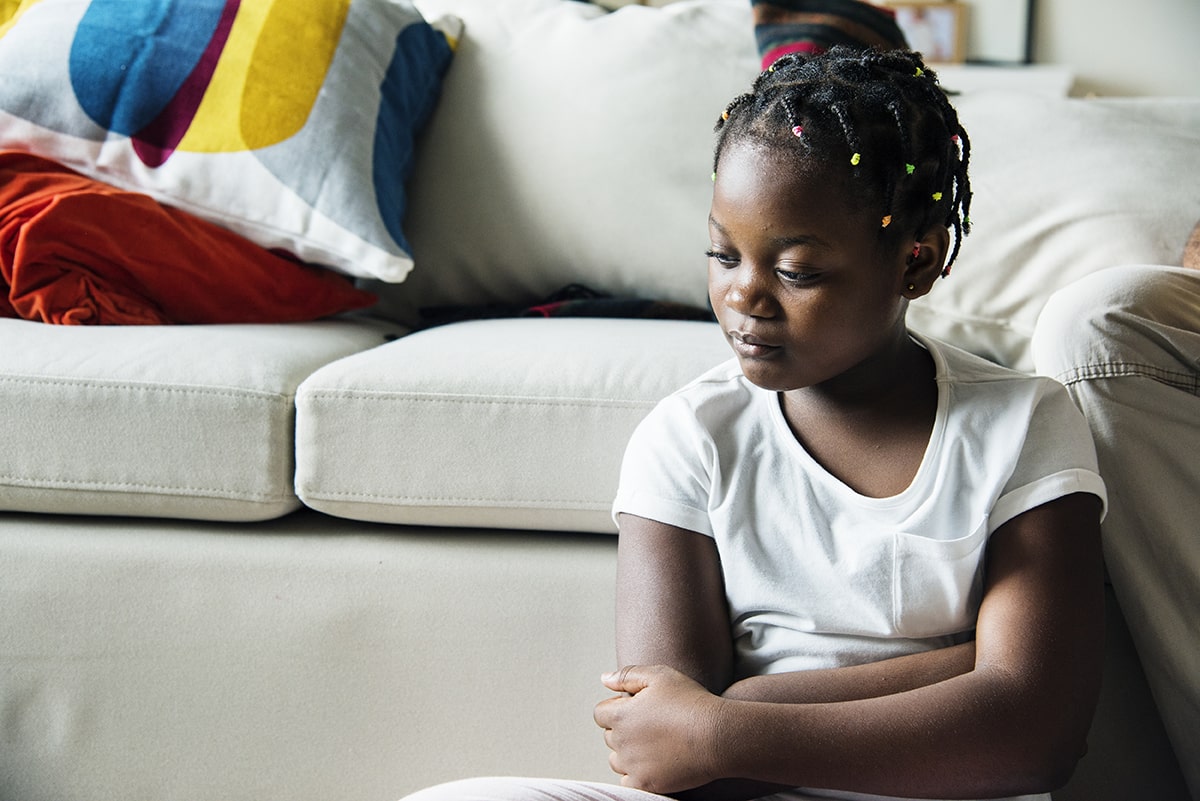
Here are 4 tell-tale signs that your child is hurting inside and is storing negative feelings in his or her nervous system:
- Your child is defiant, angry, has temper tantrums, easily triggered – this is the nervous system’s ‘fight’ response
- Your child is sad, perhaps depressed, withdrawn, uncommunicative – this is the ‘flight response’
- Your child is shut down and in their own space – this is known as the freeze response
- Your child is anxious a good deal of the time, has fears, is perfectionistic, can’t go with the flow, likes things done in a certain way
If you are seeing any of these tell-tale signs, please understand that this is message to you that some of your own ‘stuff’ may getting in the way of you being able to parent your child in the way that makes them feel good.
Most of us have some early wounds that impact how we see ourselves, how we put ourselves out there and how we parent our beloved children. As Moms and Dads, we need to know how to avoid handing down a generational program to our children that will hold them back from being the greatest version of themselves.
I know that it is a difficult thing to think about. But the reality is that if we want to help our children, we need to start by fixing the source of the problem – which is our own inner hurt.
To help your children overcome any learning, behavior or mood challenges, I would ask you to seriously consider looking into your own past hurts and heal yourself first. You have all heard so many times that on an airplane you must always put your own oxygen mask on before helping others with theirs. This is the same thing.
If you’d like to learn more about how you can help your children – of any age - feel good, behave positively, love life and be proud of who they are - then watch out for my FREE upcoming webinar: Healing Myself; Healing My Child: How to avoid Passing My Inner Hurt to My Children. If you want to receive information about this FREE webinar, be sure you are on my newsletter list by sending me an email with the subject: Send me an email.
Thank You. And I’d love to know what you think about this blog!

Do you have an Anxious Child with Low Self-Esteem? 4 Ways to Replace Anxiety with Self-Confidence
A CDC Study April 19, 2019 found that 7.1% of children aged 3-17 (approximately 4.4 million) have been diagnosed with anxiety. For children aged 3-17 years with behavior problems, more than 1 in 3 – that is 36.6% also have anxiety. The question is why are millions of children grappling with that horrible feeling we call anxiety?
One major reason:
They have a low sense of self-worth. They don’t believe in themselves. They have come to the conclusion that who they are is not enough – just not good enough. And so, the epidemic of anxiety in children is accompanied by an epidemic of children who believe they are ‘not enough’.
Anxious parents raise anxious children.
If you have an anxious child with low self-esteem do you sometimes wonder how this happened? Do you wonder, ‘Why does my child struggle with these awful feelings that makes his life so difficult?’ The answer is that anxious parents raise anxious children. Well intentioned, loving, anxious parents spend a great deal of time trying to ‘improve’ their children or ‘fix’ their children by focusing on the negatives, more often than they focus on the positives. Parents do this out of fear - fear that their beloved children won’t be successful, happy, smart, popular, courageous, resilient and confident.
The problem lies in the fact that the chemistry of anxiety is very contagious - and, especially if the child has a sensitive nature. Children are so perceptive. They are scanning us all the time. They are reading our energy. They will sense your anxiety. This leads them to start believing that Mom/Dad are worried about me because they believe ‘I am not enough’. Soon they begin to be afraid that they won’t be able to meet the expectations of their parents, teachers and friends, because they are just not enough.

If you have an anxious child, Moms and Dads, know this:
Your child’s anxiety will be healed and gone only when you heal and reverse YOUR anxiety. This is because neuroscience shows us that what is happening inside of you is happening inside of your children. This is known as Interpersonal Neurobiology. Your children begin to copy your anxious behaviors, they start to think anxious thoughts, like you do, and they begin to expect the worst case scenarios, just as you do.
If we look backwards at your parents, the grandparents of your anxious children, we will find that one or both of them were also anxious, even feeling, ‘I am not enough.’ And if you don’t break this generational program, then your children will program their children to be anxious, perpetuating this awful trait of anxiety from generation to generation.
You cannot give your children what you yourself don’t have.
We all want our children to be anxiety-free, to feel whole and confident, to be emotionally resilient, and to love life. For this to happen, WE have to show up that way. WE have to be the living example of what being anxiety-free this looks like, how it sounds, and feels and behaves. Taking children to therapists to improve their self-esteem is ridiculous if they then come home, sense your anxiety and absorb it. The good feelings the therapist may have been able to generate in the child will dissipate and be quickly replaced by the same level of anxiety Mom/Dad are projecting.
Using medication as the answer is equally dysfunctional as is trying to ‘fix’ the child without fixing yourself first. I have parents who visit and tell me, “I have been on this medication for my anxiety for years, I want you to put my son on it too. It’s the only thing that works.’ What an awful message to pass on to a child.

Are you Brave enough for this? 4 Steps to Replace Anxiety with Self-Confidence
1. Look in the Mirror.
Have the courage and insight to take ownership of the fact that if your child is anxious, this will mean that one or both parents are anxious.
Understand that your anxiety is contagious. The chemistry of anxiety within you is being picked up by your children and is disrupting their chemistry, causing them to feel anxious.
2. Decide: ‘Enough! It is time for me to heal so my child can heal.
Do your research and find a trustworthy practitioner who can help you ‘change your brain’. I emphasize ‘change your brain’ because talking about changing will not heal your anxiety. Choose a practitioner who knows how to literally help you rewire your brain. When done with the right practitioner this is truly life-changing.
3. Avoid using the Language of Anxiety.
Become aware of your conversations with your children and others. Consciously stop speaking about your anxiety and begin speaking more about what you are grateful for. Let yourself become aware of the tone of your voice when you are anxious and change it. Realize that your words and your voice and your body language impart either anxious energy or joyful energy, which changes your child’s chemistry for the better or the worse.
4. Invest in your Healing
Changing our brains from being anxious to feeling joy, appreciation of life, gratitude, serenity and peace does not happen overnight or in a few weeks. It is an exciting and fulfilling journey that requires an investment of time to make this happen.
If you want powerful parenting tools to help you on this journey see Healing Your Child's Anxiety and Fear. Click on the link and learn all about my tool box that contains 7 videos, of 15 minutes each, that will give you the information and tools you need to free your child of anxiety. Using these tools has the potential to change the trajectory of your child’s life. Imagine being able to give your child the gift of an anxious-free life!